Michelle and I arrived back at Wingsong in late March, a day and a half later due to a canceled flight and a re-booking that changed our canceled direct flight into one with a layover. Major eye roll! I arrived excited to see what changes had occurred in just a week. As expected, the feeders had run out, and one lay in pieces on the ground as if the hangry birds had attacked it out of sheer frustration… I really need to find someone to keep the feeders up!
The Mourning Dove that had been building a nest in a garden box on the front of the house had apparently succeeded; there are two eggs in the nest. We’ve started going out the side door to let her nest in peace. The Mesquite and Hackberry trees are getting greener. The fruit trees don’t seem to have died yet. And the Pyrocantha that I took such care to water is blossoming so I hope I watered it adequately and correctly.
The first day’s bird observations were quite exciting with Merlin picking up three new species: a Lucy’s Warbler, an Orange-crowned Warbler, and a Hooded Oriole. Orange-crowned Warblers are year-round residents in California, but in Arizona, they are spring migrants that move through in March and April, heading toward higher-elevation breeding grounds. They are considered early migrants compared to other warblers.
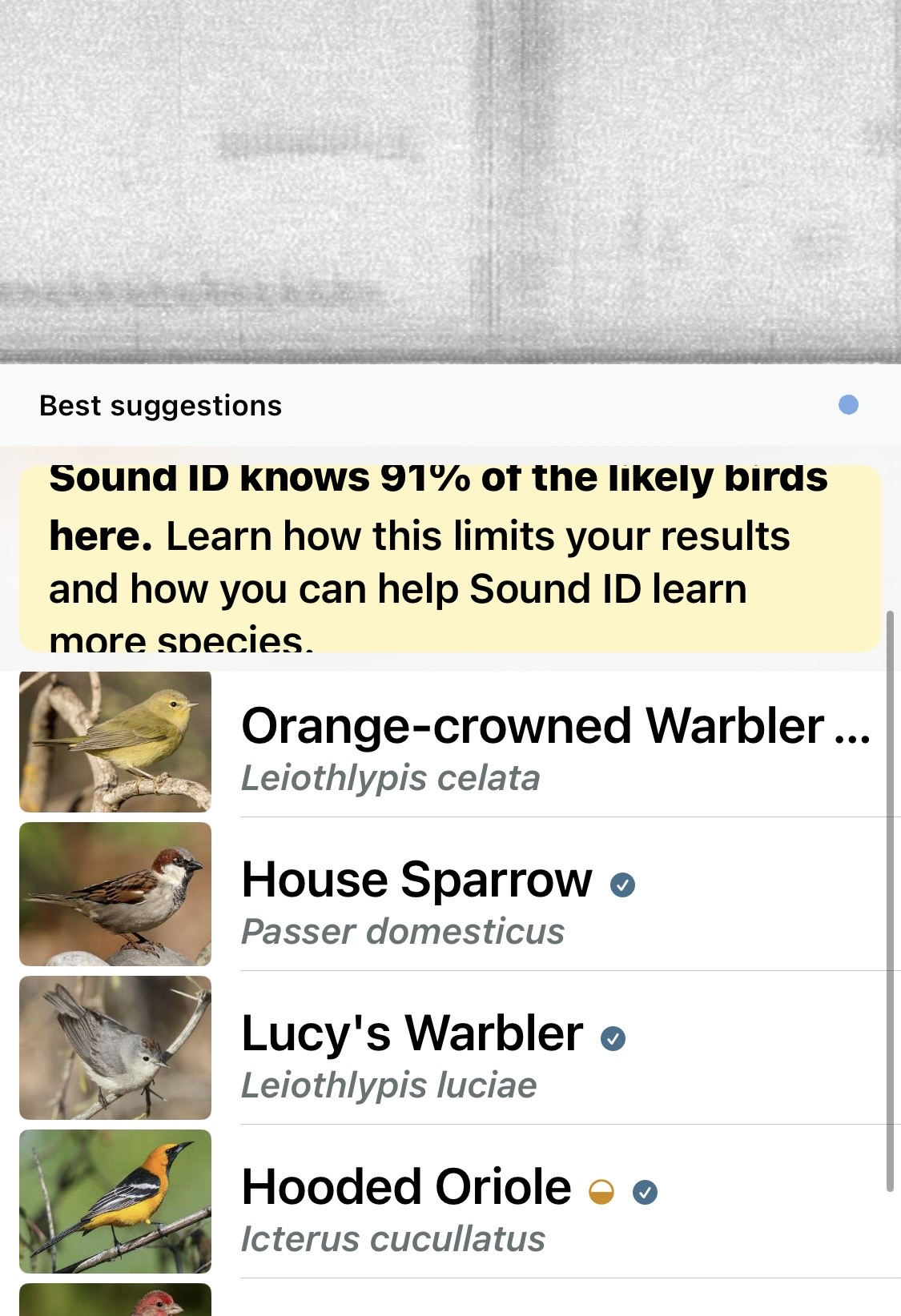
I learned about Lucy’s Warbler on a trip with the Tucson Bird Alliance. We visited old-growth Mesquite forests that are prime habitat for Lucy’s. They arrive in Spring to breed. At the event, someone who studies Lucy’s Warbler told us about a study to learn what types of nesting boxes these warblers prefer. It turns out they love triangle-shaped nesting boxes! These boxes are for sale at the TBA’s online store and brick-and-mortar shop and I am definitely going to put some up around Wingsong House! I didn’t see the Lucy’s Warbler, so I’m not officially counting it as a yard bird.
The last surprise visitor was a Hooded Oriole! Just like in CA, Orioles arrive in AZ in spring to breed and leave during the summer. These are striking birds that are bright and unmistakable. Just like with Lucy’s, I didn’t hear it, so I didn’t count it. However, the next day, a Bullock’s Oriole appeared for a few minutes, making this the first Oriole to be counted at Wingsong.
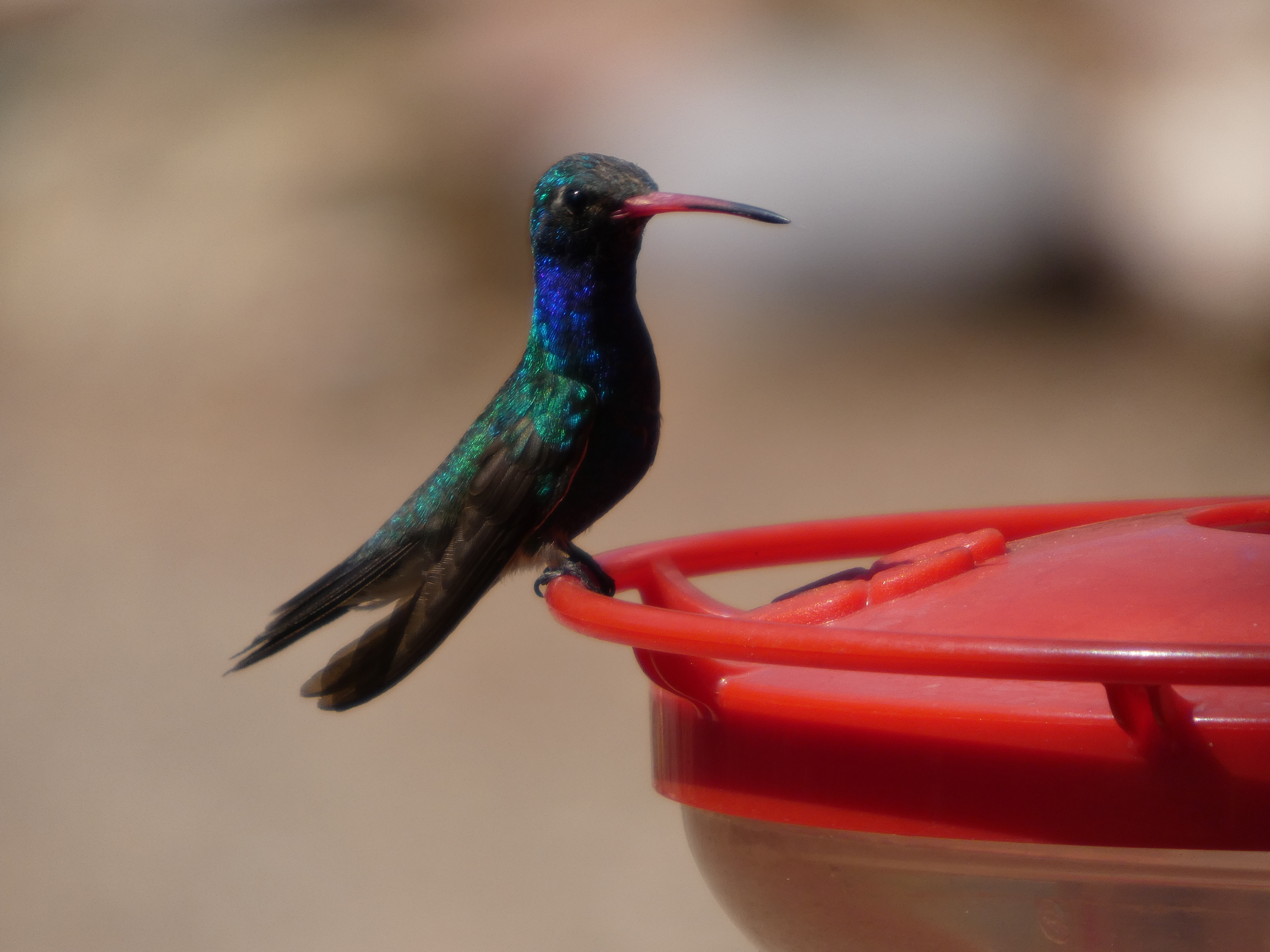
The last surprise appearance of the day was by two hummingbirds. The first was a male Broad-billed Hummingbird with its emerald and sapphire feathers and orange beak. A female has been seen, but not the male. Here is a picture from a trip last summer.
The other surprise was a Black-chinned Hummingbird! I saw this bird visiting the flowering Soap Aloe and my first thought was “Black-chinned.” Then I looked at Merlin and noticed it had picked up this species. So it makes the official yard bird list. Bullock’s is #40 and Black-chinned is #41.

 "Tails" of a New Birder's Journey
Leave a comment